The False Choice Hidden in Either-Or Questions
Spot false choice questions, identify the missing option that matters and decide whether a debate’s two proposed answers really limit the choice.
The most common mistake with false choice questions is treating the offered pair as a complete menu. You can end up defending a side you do not support, while the real dispute—who gets to define the available choices—goes unexamined.
A forced choice is not automatically misleading. A ballot may require a yes or no, or a meeting may need to record whether a motion passed. The question is whether that procedural limit is being stretched into a claim that no other policy or position exists.
Notice when a question turns disagreement into allegiance
“Are you for the proposal or against it?” sounds like a request for clarity, but it can bundle several views into two camps. Someone might support the aim, oppose the wording, favour an amendment or want more information before deciding. Those positions are not necessarily evasions; they may identify the actual disagreement.
Listen for language that demands a label: “Which side are you on?” or “If you care about the service, you must support this plan.” Such wording shifts attention from the proposal to the speaker’s loyalty or character. Bring the discussion back to the action being considered: “I support the aim, but I have not agreed to this version.”
Separate the stated limit from the wider choice
Ask what makes the choice narrow. A formal vote might permit only “for” or “against”, while a wider discussion can still consider amendments, timing or a different proposal. The ballot’s format settles how that vote is recorded; it does not, by itself, settle what choices should be available afterwards.
Be precise about the scope. “We must choose one of these proposals for today’s vote” is a claim about an immediate procedure. “There are only two possible ways to address the problem” is a broader claim that needs a different kind of defence. Do not challenge the first as if it automatically proves or disproves the second.
If a deadline or rule does close off alternatives for the immediate decision, acknowledge it. Then ask whether the rule itself can be revisited later. This keeps the conversation grounded without letting a temporary constraint masquerade as a permanent boundary.
Find an omitted option that changes the debate
Do not list every imaginable possibility. Look for an alternative that speaks to the same issue and could change what people decide, who is included or what is being voted on. It might be an amendment, a limited pilot, a different timetable or a separate vote on a disputed clause.
Imagine a council meeting where members are asked whether a library should open late every evening or keep its usual hours. One member proposes a trial of late opening on selected days, with a review before a permanent schedule is set. The proposal does not settle which schedule is best; it changes the debate by adding a practical option between the two presented.
Before raising a missing option, check each point and follow the decision it indicates:
- Observation: The alternative addresses the same stated concern. If it does, raise it as relevant; if not, explain how it connects or leave it out.
- Observation: A person or body could actually approve and carry it out. If so, discuss who would decide; if not, do not present it as a live option.
- Observation: It changes the action, timing or scope under debate. If it does, say what would change; if not, answer the original question.
- Observation: It depends on a rule or deadline being changed. If that change is possible, identify who could make it; if not, focus on the choice available now.
- Observation: It shifts a burden to another group. If it does, name who bears it; if not, compare the option on its direct consequences.
- Observation: It postpones a decision until specified information is available. If that information could affect the choice, state what is needed; if not, explain why delay would not help.
Compare options without treating compromise as a victory
A third option is not automatically fairer or better. A compromise may impose new costs, delay action or satisfy neither side. Compare each proposal against the same public criteria: what it aims to do, who is affected, what trade-offs it creates and whether it can be carried out.
For example, a proposal described as “in between” may still place most of its burden on people who were not represented in the debate. Ask who gains, who gives something up and whether the same standards are being applied to every option. Novelty is not a substitute for explaining the choice.
A drawer with two labelled compartments can still hold other things, but an empty space does not tell you what belongs there. The same applies to debate: showing that a choice may be incomplete is only the start of arguing for a particular alternative.
Keep the dispute about the proposal, not presumed motives
Questions such as “Do you want safer streets or faster journeys?” can imply that supporting one aim means disregarding the other. Often the actual disagreement is about a specific design, its effects or how competing interests should be weighed. State the shared aim separately from the proposed means, then name the point under dispute.
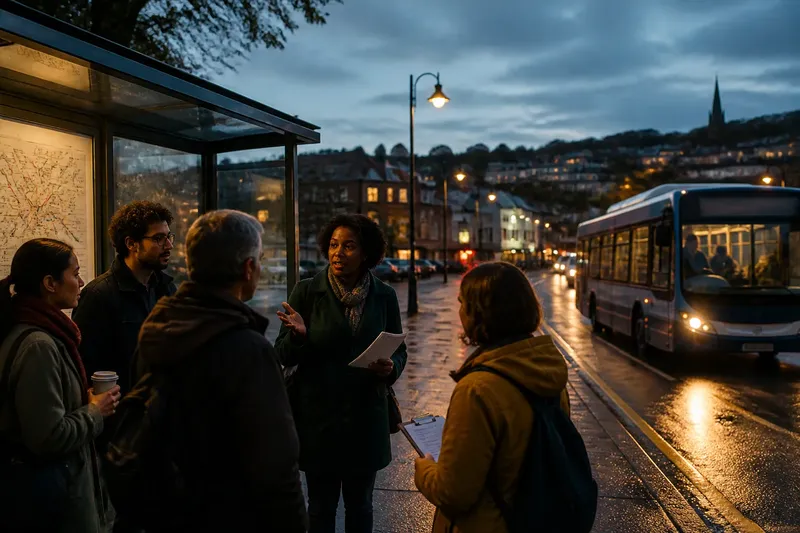
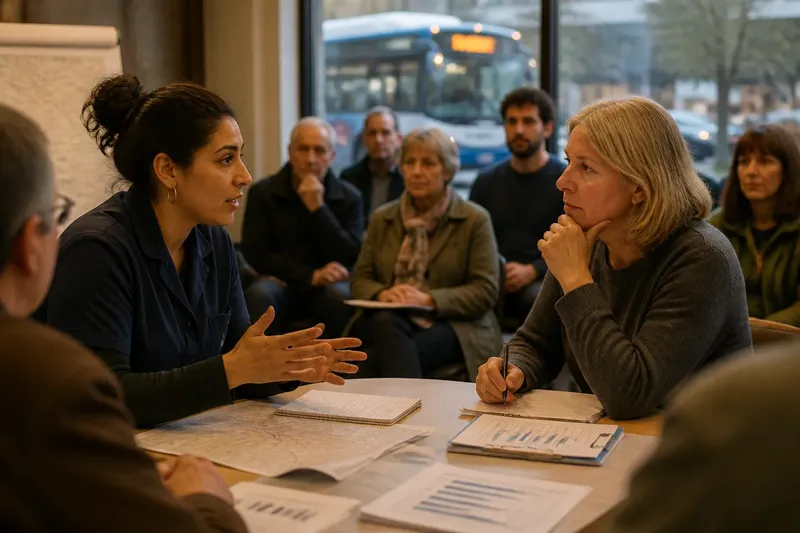
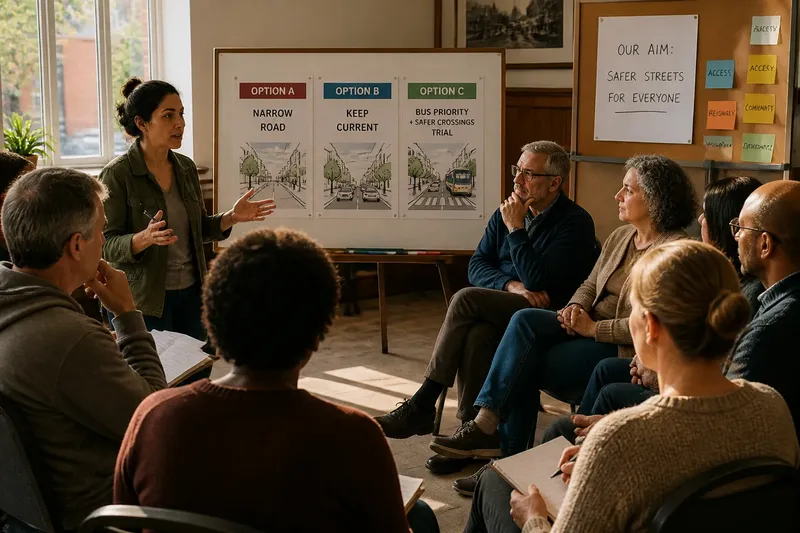
Say you are in an invented neighbourhood meeting about a street redesign. The starting point is a proposal to narrow the road; one resident supports safer crossings but worries about delays for buses. The resident asks for a bus-priority option to be considered alongside the current design, then compares how each proposal addresses crossings and bus access. The observable result is a debate about design choices rather than a claim about whether that resident cares about safety.
If the goals genuinely conflict, say so plainly. Identify whose interests are affected and which trade-off is being proposed. Do not claim that a third path removes a conflict if it merely moves the cost to someone else.
What do readers ask about false choice questions?
What makes an either-or question a false choice?
It presents two answers as exhaustive while relevant alternatives remain. A missing possibility matters when it could change the decision or the terms of the debate, not simply because it can be imagined.
Are all questions with two answers misleading?
No. A rule, ballot or immediate deadline may genuinely limit the response. Check whether that limit applies only to the procedure or also to the wider policy discussion.
Does naming a third option mean you support it?
No. It means you think the offered pair may leave something relevant out. The alternative still needs to be discussed on its merits.
How can you answer a demand for yes or no?
If the pair captures your view, answer directly and add any qualification that affects the decision. If it does not, state which part is missing and why it matters, rather than accepting a label that misstates your position.
Respond directly while challenging the frame
A clear reply can acknowledge the decision, identify what the pair leaves out and say how the options should be compared. For instance: “I agree that the schedule needs changing. I do not think these are the only choices; a limited trial could put a revised schedule on the table before a permanent decision.”
If no relevant alternative comes to mind, do not invent one just to resist the question. Answer as best you can and state what your answer assumes. If the immediate vote is genuinely limited to two proposals, deal with that vote while keeping the wider policy question distinct.
To spot false choice questions, identify what the wording excludes and whether that omission changes the debate. Then make the smallest useful correction: clarify the scope, name a viable alternative or accept that the choice really is limited. A precise answer can challenge a frame without turning every disagreement into an endless search for another option.